







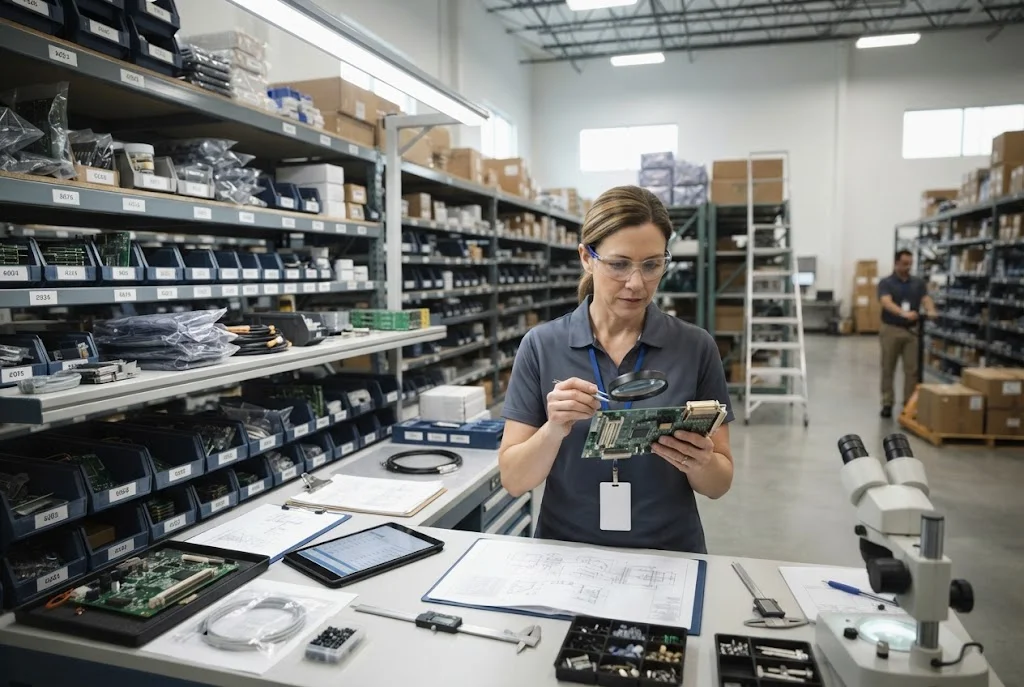
With decades of experience in parts procurement and distribution, Relli has built its business around a practical challenge: finding components that can be difficult to source through conventional channels. Its product and service offering spans electrical and electronic components, mechanical parts, aerospace equipment, land systems, naval equipment, and other military-related hardware.
For businesses, government-related customers, defense contractors, OEMs, and maintenance organizations, understanding what Relli Technology actually does provides a much clearer picture of its role in the modern industrial supply chain.
What Is Relli Technology?
Relli Technology, Inc. is a U.S.-based parts procurement and distribution company focused on military, defense, aerospace, and specialized industrial components. Its business is centered on sourcing and supplying parts that may be difficult to locate, particularly components associated with older, legacy, discontinued, or specialized equipment.
The company’s current operations are based in Boca Raton, Florida, and its services are designed around procurement, inventory availability, product traceability, quality assurance, and responsive fulfillment.
Rather than functioning primarily as a software developer, Relli operates within the physical supply chain. Its value comes from helping customers identify and obtain components needed to keep complex equipment operational.
Relli Technology’s Role in Parts Procurement
Industrial and defense organizations can face significant sourcing challenges when an original component is no longer readily available. Equipment may remain operational for many years after individual parts have become difficult to purchase through standard commercial channels.
This is where specialized distributors such as Relli Technology can become important. A procurement partner can help organizations search for compatible part numbers, locate available inventory, evaluate documentation, and coordinate delivery.
Relli’s product information indicates that its inventory and procurement capabilities cover a broad range of components rather than focusing on a single product category. This breadth can be particularly useful when a maintenance team needs multiple types of components for a larger system.
Military and Defense Components
Military equipment often has long service lives, creating ongoing demand for replacement components long after a platform or subsystem has entered mature or legacy status.
Relli Technology supplies parts associated with military equipment across land, air, and sea applications. Its product categories include components for ground forces equipment, aircraft-related systems, naval equipment, electronics, communications, and other military hardware.
The company’s role is primarily one of procurement and distribution. That means customers can use a specialized supplier to help locate required components instead of relying exclusively on original production channels.
Land Equipment
Relli’s land-equipment categories include components associated with armored vehicles, ground-force equipment, tanks, and related systems.
For organizations responsible for maintaining established vehicle fleets, access to replacement components can be an important part of keeping equipment available for maintenance and refurbishment programs.
Air and Aerospace Equipment
The company’s product categories also cover air equipment and aerospace-related components. These include parts associated with aircraft systems, engines, electronics, communications, and other aviation equipment.
Aerospace procurement places particular emphasis on documentation, quality, traceability, and part identification. These considerations make specialized sourcing especially valuable when organizations are searching for legacy or hard-to-find components.
Naval and Maritime Equipment
Relli also maintains categories related to naval equipment and shipboard systems. Like aviation and land-based military platforms, naval systems can require components for maintenance and refurbishment long after their original manufacturing cycles have changed.
Hard-to-Find and Legacy Parts
One of Relli Technology’s most distinctive areas is the sourcing of hard-to-find and legacy components.
A legacy part is generally associated with equipment that has been in service for an extended period. The original manufacturer may have changed its product line, discontinued the component, or shifted production toward newer technology. However, the equipment using that component may still be valuable and operational.
Replacing an entire system simply because one component is difficult to source is not always practical. Specialized procurement can therefore help organizations extend the useful life of existing equipment.
Relli’s current materials describe its business as a resource for obsolete and discontinued components, making legacy-part procurement a central part of its market position.
Types of Components Available Through Relli Technology
Relli’s published product categories cover a wide range of electrical, electronic, mechanical, and equipment-related components.
Examples include:
- Adapters and connectors
- Cables and cable assemblies
- Capacitors and resistors
- Circuit breakers
- Circuit card assemblies
- Diodes and transistors
- Displays and indicators
- Filters
- Fuses and fuse holders
- Integrated circuits
- Inductors and transformers
- Motors and power supplies
- Relays and switches
- Sensors and related components
- Semiconductors
- Terminals and interconnect components
- Electronic assemblies
The exact availability of any particular part can change, so procurement teams should verify current inventory, part numbers, specifications, and documentation directly with the supplier before placing an order.
Why Parts Traceability Matters
In aerospace, defense, and other highly controlled supply chains, simply finding a component is not necessarily enough. Buyers may also need confidence about where the component came from, how it was handled, what documentation accompanies it, and whether it satisfies the required specifications.
Traceability helps connect a physical component with its associated identification and documentation. This becomes especially important when components are being used in maintenance, repair, overhaul, or regulated procurement environments.
Relli’s quality information describes inspection, testing, lot identification, documentation control, and traceability processes as part of its quality system. These processes are intended to help ensure that supplied materials correspond with customer requirements.
Relli Technology and Quality Assurance
Quality assurance is a major consideration in aerospace and defense parts procurement. Relli’s current website identifies certifications including ISO 9001:2015, AS9100:D, and AS9120B.
These standards are relevant to quality management and distribution activities, particularly where customers require documented processes and controlled handling of products.
For procurement teams, certification is only one part of supplier evaluation. Buyers should still confirm the exact certification scope, current validity, product documentation, applicable specifications, and contractual requirements for a particular purchase.
How Relli Supports Maintenance and Repair Operations
Maintenance organizations often work under pressure to return equipment to service. A missing component can delay a larger repair even when the rest of the system is ready.
A specialized distributor can help by providing access to inventory and procurement expertise across a broad range of part categories. This is particularly useful when the required component is no longer commonly available through standard commercial distributors.
Relli’s published product information specifically positions its inventory for maintenance, repair, overhaul, and refit requirements. That makes the company relevant to organizations maintaining equipment with long operational lifecycles.
Relli Technology and OEM Supply Chains
Original equipment manufacturers can also require specialized components throughout production, maintenance, and aftermarket operations.
Relli states that its products can be used as components by OEMs as well as replacement parts for maintenance and repair activities. This creates a supply-chain role that extends beyond traditional spare-parts purchasing.
For an OEM, a specialized distributor can potentially provide another procurement channel when standard sourcing routes do not meet a particular requirement.
Global Procurement and Distribution
Although Relli Technology is headquartered in Florida, its business has an international dimension. The company describes its products as being supplied to customers in the United States and numerous international markets.
International procurement introduces additional considerations such as export controls, documentation, shipping requirements, destination restrictions, and applicable regulations. Customers purchasing controlled or specialized equipment should always verify the requirements that apply to their specific transaction.
Technology Behind Modern Parts Procurement
Parts procurement may appear straightforward from the outside, but large inventories and thousands of possible part identifiers create a significant information-management challenge.
Modern procurement operations depend on searchable inventory databases, accurate part-number records, product documentation, supplier information, logistics systems, and quality records. These technologies help procurement teams move from a manual search process toward more structured sourcing.
Relli’s long-standing inventory and procurement model illustrates how technology can support a business whose primary products are physical components rather than software.
This relationship between specialized technology and industrial operations is also visible in other PostingNest technology coverage, including SIELC Technologies and its laboratory technology solutions.
Relli Technology and Advanced Industrial Systems
Modern military and aerospace systems increasingly combine mechanical hardware, electronics, communications, sensors, and specialized materials. Maintaining those systems can therefore require suppliers with knowledge across multiple component categories.
This is one reason specialized suppliers remain relevant even as newer technologies enter the market. Legacy platforms do not automatically disappear when new platforms are introduced. Many organizations continue operating, upgrading, repairing, or refurbishing established equipment.
For readers interested in another side of specialized industrial technology, PostingNest’s coverage of ARC Technologies in Amesbury, Massachusetts examines advanced RF, EMI, microwave, and composite-material applications that can intersect with complex aerospace and defense technology environments.
What Makes Legacy Parts Procurement Difficult?
Legacy procurement can involve several challenges at the same time:
- The original manufacturer may no longer produce the component.
- Part numbers may have changed across production generations.
- Equivalent or alternate parts may require technical verification.
- Available inventory may be distributed among multiple suppliers.
- Documentation requirements can vary by customer and application.
- Older components may require additional inspection or authentication.
- International transactions may involve additional compliance requirements.
These factors make specialized procurement more than simply searching for a product name. Accurate identification and documentation are often critical to the purchasing decision.
How Businesses Can Evaluate a Parts Supplier
Organizations looking for a military, aerospace, or industrial parts supplier should evaluate several factors before selecting a procurement partner.
1. Inventory Depth
Look for a supplier with meaningful inventory coverage across the types of components your organization regularly needs.
2. Part Identification
Accurate part-number management is essential. A supplier should be able to distinguish between similar components, variations, revisions, and applicable specifications.
3. Documentation
Ask what certificates, traceability records, inspection information, and manufacturer documentation are available for the specific component.
4. Quality Management
Review the supplier’s applicable quality certifications and understand what those certifications cover.
5. Procurement Experience
Experience with legacy and difficult-to-source components can be valuable when conventional distribution channels do not have the required part.
6. Logistics Capability
Delivery requirements matter just as much as sourcing. Consider warehouse location, shipping processes, international capabilities, and expected fulfillment timelines.
Relli Technology for Aerospace and Defense Buyers
For aerospace and defense organizations, supplier evaluation often extends beyond price. Reliability, documentation, quality systems, traceability, availability, and procurement experience can all influence the suitability of a supplier.
Relli’s positioning around military and aerospace parts makes it particularly relevant to buyers looking for established supply-chain support rather than a general-purpose technology platform.
The right supplier will ultimately depend on the exact part, application, customer requirements, certification needs, and procurement conditions involved in the transaction.
Questions to Ask Before Ordering
Before purchasing a specialized or legacy component, buyers may want to ask:
- Is the exact part number available?
- Is the component new, refurbished, or otherwise classified?
- What manufacturer documentation is available?
- Is the lot traceable?
- What inspection or testing has been completed?
- Which quality certifications apply?
- Are alternate or substitute part numbers available?
- What are the shipping and delivery requirements?
- Are export or import restrictions applicable?
- Does the component meet the customer’s technical specification?
The Future of Specialized Parts Procurement
The continued operation of mature aerospace, defense, transportation, and industrial systems means that demand for legacy components is unlikely to disappear simply because newer technologies are available.
At the same time, procurement is becoming increasingly data-driven. Searchable inventories, digital documentation, structured part-number databases, automated logistics, and stronger traceability systems can make specialized sourcing more efficient.
Companies such as Relli Technology occupy an important position within this environment because their value is tied not only to inventory, but also to the ability to help customers navigate complex component-sourcing requirements.
Frequently Asked Questions About Relli Technology
What does Relli Technology do?
Relli Technology, Inc. is a U.S. supplier and distributor of military, defense, aerospace, and specialized components, including hard-to-find and legacy parts.
Where is Relli Technology located?
Relli Technology’s headquarters are in Boca Raton, Florida.
Does Relli Technology supply aerospace parts?
Yes. Aerospace and aviation components are among the product areas covered by Relli Technology.
Does Relli Technology handle obsolete or discontinued parts?
Yes. Finding hard-to-source, obsolete, discontinued, and legacy components is a central part of the company’s stated business model.
What types of components does Relli Technology supply?
Its published categories include electrical and electronic components, connectors, cables, circuit assemblies, semiconductors, switches, relays, power components, sensors, and equipment-specific parts.
Is Relli Technology a software company?
No. Relli Technology, Inc. is primarily a physical parts procurement and distribution company serving military, aerospace, defense, and related industrial markets.
What certifications does Relli Technology have?
Relli’s current website identifies ISO 9001:2015, AS9100:D, and AS9120B certifications. Buyers should verify the current certification scope and applicability to their specific procurement requirement.
Final Thoughts
Relli Technology represents a specialized part of the modern industrial supply chain. Its focus is not generic business software but the sourcing and distribution of military, aerospace, defense, electronic, and hard-to-find components.
Its relevance comes from a practical need: complex equipment often remains in service for years, creating continuing demand for replacement parts, legacy components, maintenance materials, and specialized procurement support.
For organizations evaluating Relli Technology, the most important considerations are the specific component required, availability, documentation, traceability, quality requirements, certification scope, and delivery needs. A supplier that can address those factors effectively can become a valuable part of a long-term maintenance and procurement strategy.