





Knowing how to prepare for a job interview is a skill that pays off for your whole career. Interviews are rarely won on the day itself. They are won in the days before, when you research the role, practise your answers, and sort out the practical details, so that on the day you can focus on the conversation instead of worrying about what comes next. Whether you are applying for your first job or changing direction after years in one field, the same preparation steps apply. This guide walks through them in order, from research to the final evening before the interview.
Research the Role and the Employer
Start by reading the job description carefully, line by line. Note the skills and experience it asks for, and match each one to something you have actually done. Interviewers notice when a candidate understands the role beyond its title, so find out what the organisation does, who it serves, and what challenges it faces. A quick look at recent news, the organisation’s own website, and its social pages usually gives you enough to talk sensibly about why you want this particular job, not just any job.
If the role is in a regulated or licensed field, check what credentials it requires before you apply. For teaching and similar professions, for example, verifying education credentials is a normal part of hiring, and arriving with your paperwork in order shows professionalism. The same applies across sectors: know the requirements of the job you are chasing, whether that means a teaching post like physical education teacher jobs, a specialist role such as music education jobs, or a completely different field. Research turns a generic application into a specific one.
Practise Answers to the Questions That Matter
Most interviews include a handful of predictable questions: tell us about yourself, why do you want this role, what are your strengths and weaknesses, and describe a time you solved a problem. Prepare a short, honest answer for each, built around real examples from your work or study. The strongest answers follow a simple shape: the situation you faced, what you did, and what happened as a result. Keep each answer under two minutes, and practise saying it out loud, not just thinking it through. Answers that sound good in your head often ramble when spoken.
Prepare questions of your own as well. Asking about the team, the first three months in the role, or how success is measured shows genuine interest and gives you information you need to decide whether the job suits you. Avoid questions you could have answered with a quick search, and do not open with salary unless the interviewer raises it. If you are exploring a new area, browsing current education jobs and similar listings beforehand helps you understand what employers in that field actually value, which sharpens both your answers and your questions.
Sort the Practical Details Early
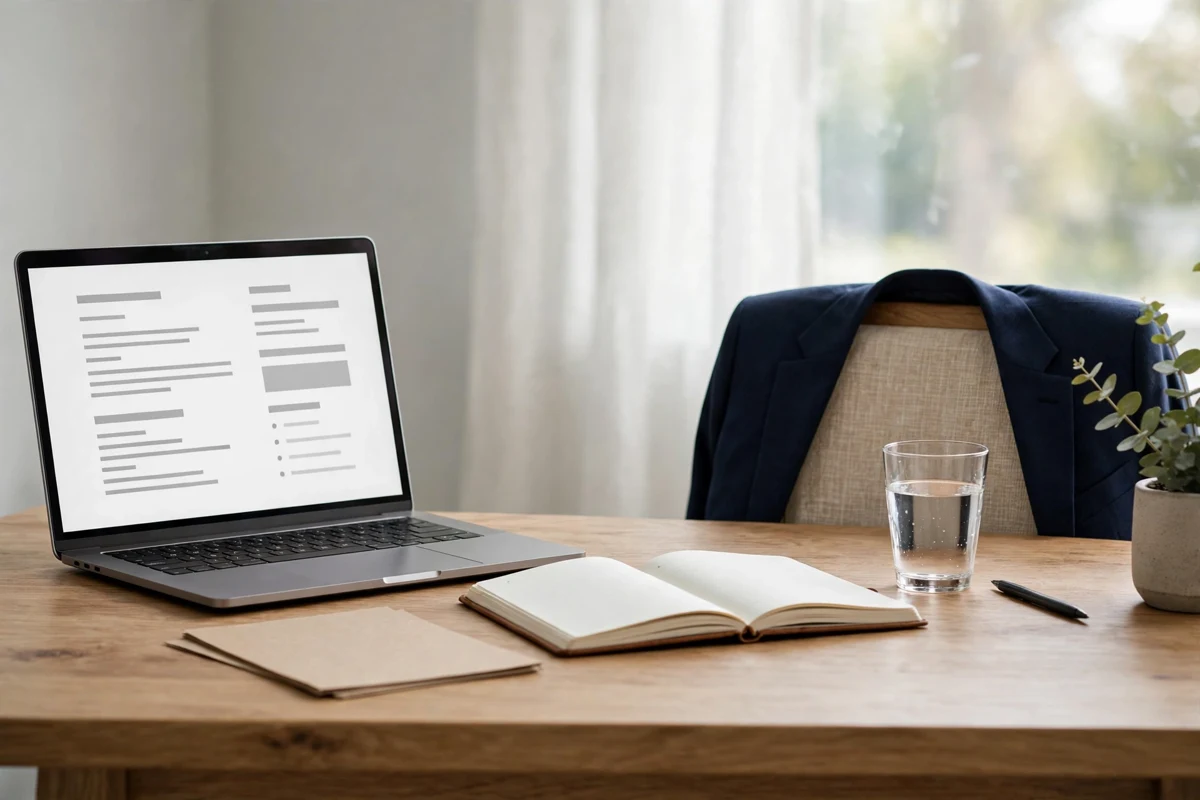
Interviews go wrong on practical details more often than on hard questions. Confirm the time, place, and format in advance, and plan your journey with spare time built in. If the interview is online, test your camera, microphone, and connection the day before, and choose a quiet, tidy background. If it is in person, lay out your clothes the night before and pack everything you need: copies of your resume, a notebook, a pen, and identification if requested. Arriving ten minutes early is professional; arriving flustered and late is hard to recover from.
Dress for the workplace you are joining, one step smarter than its everyday style if you are unsure. A tidy, comfortable outfit that you feel confident in beats an uncomfortable formal one. Eat a proper meal beforehand, drink water, and avoid heavy caffeine just before the interview if it makes you jittery. These small things sound obvious, but they are exactly what candidates forget when nerves take over, and they make a real difference to how clearly you think.
The Evening Before and the Day Itself
The evening before an interview should be calm, not crammed with last-minute preparation. Review your notes once, lay out your clothes, and then stop. A relaxed evening, a proper meal, and a good night’s sleep will do more for your performance than hours of extra revision. Many candidates find that taking a short break from screens the night before helps them sleep better and arrive clearer-headed. If your mind races, write down your main points and your questions, then put the notes aside: you have done the work, and the list will be there in the morning.
On the day, be polite to everyone you meet, from the receptionist to the panel, because first impressions start before the formal interview does. Listen carefully to each question, take a moment to think before answering, and be honest about what you do not know. Interviewers respect a candidate who says they would find out, far more than one who bluffs. At the end, thank the interviewers, restate briefly why you are excited about the role, and ask about the next steps and timeline. Then follow up with a short thank-you message the same day.
After the Interview
Whatever the outcome, every interview is useful preparation for the next one. Write down the questions you were asked while they are fresh, note which answers felt strong and which felt weak, and keep that list for next time. If you are not selected, a polite request for feedback can teach you more than the interview itself, and many employers are happy to give it. Keep applying, keep practising, and treat each interview as a skill you are building. The candidates who succeed are rarely the ones who never feel nervous. They are the ones who prepared well enough that nerves do not run the show.