


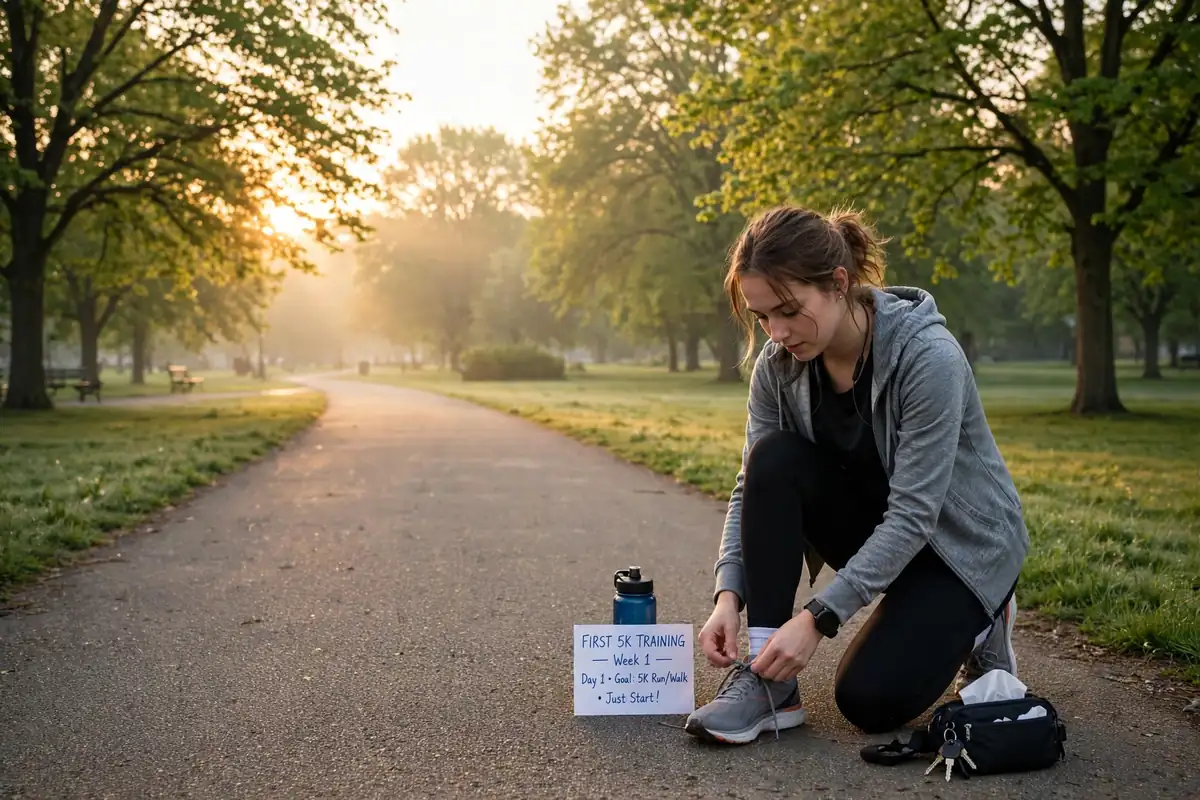




Eight weeks from now, you could be jogging across the finish line of your first 5K, medal or no medal, wondering why you waited so long to start. This beginner 5K training plan is built for real life. It assumes you can walk briskly for about thirty minutes, and it asks for three short sessions a week, not a complete lifestyle overhaul.
The plan works because it is patient. You will mix walking and running at the start, stretch the running parts a little each week, and let your body adapt at a pace it can actually handle.
What a 5K Really Asks of Your Body
A 5K is five kilometres, or about three point one miles. For most beginners, that means somewhere between thirty and forty five minutes of steady movement on race day. It is a friendly distance, long enough to feel like an achievement and short enough to train for alongside a job, a family and everything else.
Your heart, lungs and legs all adapt quickly in the first few weeks. The catch is that your joints and tendons adapt more slowly than your fitness does. That gap is why beginners get hurt when they jump straight into daily running, and it is why this plan builds in rest days from the very start.
The Gear You Need, and What You Can Skip
You need less than the adverts suggest. One pair of proper running shoes, comfortable clothes you can move in, and a watch or phone to time your intervals will carry you through the whole eight weeks.
Shoes matter most. If you are buying your first pair, our guide on how to choose running shoes that fit your feet and your goals walks you through fit, cushioning and the mistakes that lead to blisters. Everything else, from GPS watches to special socks, can wait until you know you enjoy running.
Your Eight-Week Beginner 5K Training Plan
Each week has three sessions. Keep the running parts at a pace where you can still speak in short sentences. If you cannot talk, you are going too fast, and slowing down is not cheating, it is the whole method.
Weeks one and two: walk, run, repeat
Alternate one minute of easy running with two minutes of walking, for twenty minutes in week one and twenty four minutes in week two. Finish each session feeling like you could have done a little more. That restraint is what keeps you consistent.
Weeks three and four: longer running blocks
Move to two minutes of running and one minute of walking, then three minutes of running and one minute of walking. Your total session grows to about twenty eight minutes. By the end of week four, most beginners notice the first two minutes of a session feel easier than they did at the start.
Weeks five and six: mostly running
Stretch the running blocks to five, then eight minutes, with one minute of walking between them. In week six, try one continuous run of twenty minutes at your easy pace. Keep one session shorter each week so the plan never feels like a grind.
Weeks seven and eight: race ready
Run twenty five minutes continuously in week seven, then thirty minutes in week eight. Two days before your 5K, do one short, gentle fifteen minute jog and stop there. You arrive at the start line rested, which is worth more than one extra hard session.
How to Pace Yourself on Every Run
New runners almost always start too fast. The first five minutes should feel almost too easy, like you are holding something back. That is the correct feeling, and it is what lets you finish strong instead of fading at halfway.
On hills, shorten your stride and keep the same effort rather than the same speed. On hot days, slow down earlier than you think you need to. A simple rule helps here: if you finish a session smiling, your pacing was right, whatever the watch says.
Recovery: The Part That Makes You Faster
Your body gets stronger on the days between runs, not during the runs themselves. Sleep is the biggest lever you control, and our piece on how an active lifestyle and sleep work together explains why tired legs often trace back to short nights rather than hard training.
Cross training keeps you moving without the impact. One easy ride a week works well, and our beginner guide to starting cycling for fitness shows how to set it up. On full rest days, put the phone down for an hour too. A short break from screens does more for your head than another scroll through training videos.
A Real Example: How Priya Reached Her First 5K
Priya, a thirty four year old teacher, had not run since school when she signed up for a local charity 5K with eight weeks to spare. In week one she could run for about forty seconds before needing to walk, and she nearly quit after a rainy second session left her soaked and annoyed.
What changed things was shrinking the goal. She stopped thinking about the full distance and only aimed to finish the next interval. She also laid her shoes and clothes out the night before, which removed the morning argument with herself. By week six she ran twenty minutes without stopping, and on race day she finished in thirty eight minutes, walking only at the water station.
Race Day: Putting It All Together
Eat the breakfast you have practised with, nothing new. Arrive early enough to pin your number on without rushing, and start further back than your pride wants you to. The first kilometre will feel crowded and slow, and that is fine, because it stops you sprinting the start.
Plenty of runners turn their first 5K into a small trip, and planning one is half the fun. If that appeals to you, our checklist on how to plan a road trip covers routes, budgets and packing, so your race weekend runs as smoothly as your training did.
Your First Finish Line Is Closer Than You Think
You do not need talent, youth or a runner’s build to finish a 5K. You need eight weeks, three short sessions a week, and the patience to let walking breaks do their quiet work. Pick a date, mark the first session in your calendar, and let the plan carry you the rest of the way.