







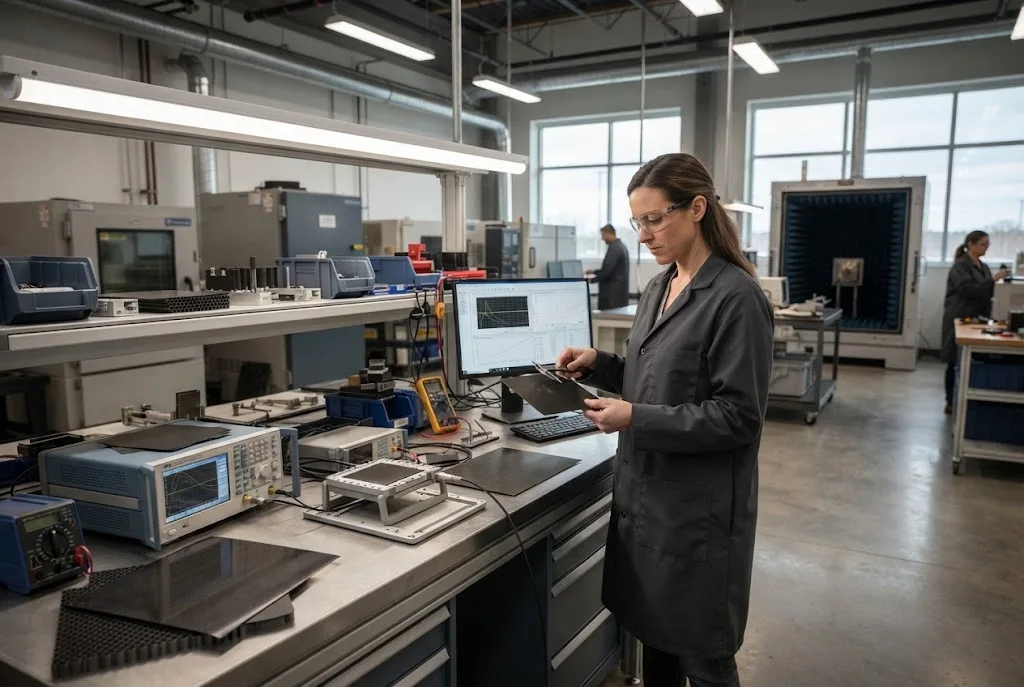
ARC Technologies developed a reputation for producing RF and EMI absorbing materials used across demanding military, aerospace, and industrial applications. Its capabilities include absorber materials, conductive and dielectric materials, composites, radomes, and other specialized solutions designed around electromagnetic performance requirements.
This article explores ARC Technologies in Amesbury, the technologies behind its materials, the role of EMI and RF absorption, its applications, manufacturing capabilities, and why specialized materials remain important to modern electronics and aerospace systems.
What Is ARC Technologies in Amesbury, MA?
ARC Technologies is a specialized materials manufacturer headquartered in Amesbury, Massachusetts. The company has focused on electromagnetic and microwave absorbing materials for applications where unwanted RF energy or electromagnetic interference can affect system performance.
Today, the Amesbury operation is part of Hexcel. Hexcel describes ARC Technologies as a leading supplier of custom RF, EMI, and microwave absorbing composite materials for military, aerospace, and industrial applications.
The Amesbury facility is located at 37 S Hunt Road in Amesbury, Massachusetts, and continues to support specialized materials development and manufacturing within the broader Hexcel organization.
What Does ARC Technologies Produce?
ARC Technologies has developed a diverse range of materials intended to absorb, control, or otherwise manage electromagnetic energy. These products are particularly important when electronic systems need protection from interference or when engineers need to control how electromagnetic waves interact with a structure.
The Amesbury operation’s capabilities include:
- RF and EMI absorber materials
- Microwave absorbing materials
- Conductive materials
- Dielectric materials
- Metal-filled thermoset materials
- Metal-filled thermoplastic materials
- Composite materials
- Radome-related materials and solutions
- Plating and specialized electromagnetic materials
The exact material selected depends on the frequency range, physical environment, mechanical requirements, thermal conditions, and electromagnetic performance required by the application.
Understanding RF and EMI Absorption
To understand ARC Technologies’ role, it helps to distinguish between RF energy and electromagnetic interference.
Radio-frequency energy is part of the electromagnetic spectrum used by communications, radar, sensors, wireless systems, and numerous other technologies. Electromagnetic interference occurs when unwanted electromagnetic energy disrupts the normal operation of an electronic system.
Interference can become a serious engineering problem when electronic devices operate close together or when sensitive equipment must function in environments containing strong electromagnetic fields.
Absorbing materials can help control these unwanted signals by converting portions of electromagnetic energy into other forms of energy, typically heat, rather than allowing the energy to reflect or propagate through an area where it could cause problems.
Why EMI Control Matters in Modern Electronics
Modern systems contain increasing numbers of electronic components, sensors, processors, communication systems, and high-speed circuits. As electronic architectures become more sophisticated, electromagnetic compatibility becomes an important engineering consideration.
Uncontrolled electromagnetic energy can contribute to interference between components or systems. In highly sensitive environments, even relatively small levels of unwanted electromagnetic energy may affect measurement accuracy, communications, sensing, or system reliability.
EMI-control materials can therefore become part of the physical design of a system rather than being an afterthought.
Electronic System Protection
Specialized absorbing materials can be incorporated into equipment and structures to reduce unwanted electromagnetic interactions. Their role depends on the system architecture and the frequencies that engineers need to control.
Signal and Microwave Management
Microwave systems require careful management of electromagnetic energy because reflections and unwanted signals can affect system behavior. Materials engineered for microwave absorption can help control these effects.
Electromagnetic Compatibility
EMC engineering considers how electronic systems interact with their electromagnetic environment. Materials, shielding, grounding, filtering, component placement, and system architecture can all contribute to EMC performance.
ARC Technologies and Aerospace Applications
Aerospace systems place demanding requirements on materials. Components may need to function under changing temperatures, vibration, mechanical stress, weight constraints, and strict performance requirements.
Electromagnetic control is also important in aircraft and aerospace systems because communication, navigation, radar, sensing, and other electronic technologies must operate reliably within a highly integrated environment.
ARC Technologies’ specialization in RF, EMI, microwave absorption, and composite materials makes its capabilities relevant to aerospace engineering applications where electromagnetic performance and material properties must work together.
Within the broader technology landscape, this type of specialized engineering illustrates how advanced manufacturing companies solve narrowly defined technical problems. Other technology manufacturers covered by PostingNest, such as SIELC Technologies and its specialized laboratory technologies, demonstrate a similar emphasis on application-specific scientific and engineering solutions.
ARC Technologies and Defense Applications
Defense systems often combine communications, radar, sensors, electronic controls, and other electromagnetic technologies in environments where system reliability is critical.
RF and microwave absorbing materials can be used as part of broader electromagnetic-management strategies. The objective may be to reduce unwanted reflections, control interference, or manage electromagnetic energy within a particular system.
ARC Technologies has historically served defense-related applications and is identified as a defense and aerospace manufacturing company. Its materials capabilities are therefore connected to the demanding requirements associated with military and aerospace electronics.
Industrial Uses of RF and EMI Materials
Electromagnetic control is not limited to defense and aerospace. Industrial systems increasingly rely on electronics, automation, sensors, wireless communication, and high-speed processing.
As industrial environments become more electronically integrated, controlling electromagnetic interference can become important for maintaining reliable operation.
Specialized absorber and composite materials may be useful in applications involving:
- Industrial electronic equipment
- RF systems
- Microwave equipment
- Electronic testing environments
- Communication-related systems
- Sensor technologies
- Specialized enclosures and components
- Aerospace and industrial structures
Advanced Materials Behind ARC Technologies
One of the most important aspects of ARC Technologies is its use of engineered material systems rather than a single universal absorber.
Different applications require different combinations of electrical, mechanical, thermal, and physical characteristics. Material formulation can therefore involve different fillers, polymers, composite structures, and processing methods.
Hexcel’s current description of the Amesbury operation identifies metallic-filled thermoset, thermoplastic, and composite materials for managing electromagnetic interference and microwave energy.
Metal-Filled Materials
Metallic fillers can provide electrical and electromagnetic properties that are useful for specialized RF and EMI applications. The type, concentration, distribution, and surrounding matrix can influence the resulting material behavior.
Thermoplastic Materials
Thermoplastic-based materials can offer useful processing and mechanical characteristics for applications requiring specialized electromagnetic properties combined with the advantages of thermoplastic manufacturing.
Thermoset Materials
Thermoset systems can provide different combinations of mechanical and thermal properties and may be selected for applications where long-term structural performance is important.
Composite Materials
Composite materials allow engineers to combine different constituents to achieve a targeted balance of properties. In electromagnetic applications, this can involve designing a material around specific frequency, attenuation, structural, or environmental requirements.
ARC Technologies and Custom Material Development
Standard materials cannot always satisfy a specialized engineering requirement. Frequency range, geometry, thickness, weight, temperature, mechanical loads, and installation method can all influence material selection.
Custom material development can therefore be important for organizations working on specialized systems. Rather than choosing a generic absorber, engineers may need a material designed around a particular application and set of performance requirements.
ARC Technologies’ history of developing application-specific RF and EMI materials is part of what distinguishes its Amesbury operation from a conventional materials supplier.
Manufacturing Capabilities in Amesbury
The Amesbury operation combines material development with manufacturing and testing capabilities. According to the current Hexcel certification documentation, the site operates under a quality-management system covering the design, manufacture, and testing of metallic-filled thermoset, thermoplastic, and composite materials used to manage EMI and microwave energy.
The facility’s manufacturing role is important because specialized electromagnetic materials must perform consistently from one production batch to another. Quality control helps ensure that material properties remain within the requirements established for a particular application.
Quality and Aerospace Manufacturing Standards
Quality systems are particularly important when materials are supplied for aerospace and other highly regulated or performance-sensitive applications.
The Amesbury ARC Technologies operation currently holds certification to AS9100D and ISO 9001:2015 for the design, manufacture, and testing of its electromagnetic materials. These standards provide a structured framework for quality management and aerospace-related manufacturing processes.
For customers, formal quality systems can provide additional confidence that manufacturing and quality-control processes are documented and managed systematically.
ARC Technologies as Part of Hexcel
ARC Technologies became part of Hexcel in January 2019. This acquisition connected ARC’s specialized RF and EMI material capabilities with a larger advanced-materials organization.
Hexcel is known for advanced composites and engineered materials used in aerospace and other demanding industries. Within that broader organization, ARC’s electromagnetic material expertise adds a specialized capability focused on RF, EMI, and microwave applications.
The current Hexcel Amesbury facility information provides official details about the site’s location, ARC Technologies’ acquisition, and its current material capabilities.
Why Amesbury Matters to Advanced Manufacturing
Amesbury is located in northeastern Massachusetts, close to the New Hampshire border and north of Boston. The city’s industrial history and location within the broader New England manufacturing ecosystem provide a useful setting for specialized engineering and materials operations.
ARC Technologies’ presence in Amesbury is significant because advanced manufacturing increasingly depends on specialized materials rather than only conventional mechanical components.
When electronics become more sophisticated, material properties can directly affect the performance of the finished system. Companies with expertise in electromagnetic materials can therefore play an important role in the development of advanced electronic and aerospace products.
ARC Technologies and the Future of Electromagnetic Materials
The need to control electromagnetic energy is unlikely to disappear as electronics become more integrated. New communication systems, sensors, radar technologies, autonomous platforms, aircraft electronics, and industrial systems all create new electromagnetic engineering challenges.
Future material development is likely to focus on combinations of electromagnetic performance, lighter weight, improved durability, manufacturability, thermal stability, and application-specific characteristics.
This creates opportunities for specialized materials manufacturers to contribute to next-generation engineering projects. ARC Technologies’ continued role within Hexcel places its RF and EMI expertise within a broader advanced-materials environment.
How Engineers Evaluate EMI Absorbing Materials
Selecting an absorber is not simply a matter of choosing the material with the highest possible attenuation. Engineers must consider the complete application.
Important factors can include:
- Frequency range: The material must perform within the frequencies relevant to the application.
- Required attenuation: Engineers need to establish how much electromagnetic energy must be controlled.
- Material thickness: Available space can affect which absorber technologies are practical.
- Weight: Weight can be particularly important in aerospace applications.
- Temperature: The material must maintain appropriate performance within its operating environment.
- Mechanical requirements: Structural, flexibility, durability, and installation requirements can influence material selection.
- Environmental exposure: Moisture, chemicals, vibration, and other environmental factors may need to be considered.
- Manufacturing process: The selected material must be compatible with how the finished component will be manufactured and assembled.
ARC Technologies Amesbury MA: Key Takeaways
ARC Technologies Amesbury MA is best understood as a specialized advanced-materials operation focused on electromagnetic energy management. Its expertise centers on RF and EMI absorbing materials, microwave technologies, conductive and dielectric materials, composites, and related manufacturing capabilities.
The company’s integration into Hexcel has expanded the context in which these capabilities are delivered while maintaining the Amesbury site’s specialized role.
For engineers and organizations working with aerospace, defense, industrial electronics, microwave systems, and other electromagnetic applications, specialized material science remains an important part of solving real-world design challenges.
Frequently Asked Questions About ARC Technologies Amesbury MA
Where is ARC Technologies located?
ARC Technologies’ Amesbury operation is located at 37 S Hunt Road, Amesbury, Massachusetts 01913.
Is ARC Technologies still an independent company?
No. ARC Technologies was acquired by Hexcel in January 2019 and now operates as part of the Hexcel organization.
What does ARC Technologies specialize in?
ARC Technologies specializes in RF, EMI, and microwave absorbing materials, including specialized composite, thermoplastic, thermoset, conductive, and dielectric material systems.
Who uses ARC Technologies materials?
The company’s technologies are relevant to military, aerospace, industrial, and other applications where electromagnetic interference and microwave energy need to be controlled.
Why are EMI absorbing materials important?
EMI absorbing materials can help control unwanted electromagnetic energy and reduce interference within electronic systems and environments.
Does ARC Technologies manufacture its materials?
Yes. The Amesbury operation has design, manufacturing, and testing capabilities for specialized electromagnetic materials, including metallic-filled thermoset, thermoplastic, and composite materials.
Conclusion
ARC Technologies Amesbury MA illustrates the importance of specialized materials in modern electronics, aerospace, defense, and industrial engineering. Its focus on RF, EMI, and microwave absorption addresses a technical challenge that becomes increasingly important as electronic systems grow more sophisticated and interconnected.
Now operating within Hexcel, the Amesbury facility combines ARC Technologies’ specialized electromagnetic-material expertise with the resources of a larger advanced-materials company. Its work demonstrates how material science, manufacturing, testing, and application-specific engineering can come together to solve complex technology problems.
For industries where electromagnetic performance matters, the right material can be as important as the electronic system itself. That makes specialized RF and EMI material development an important part of the continuing evolution of advanced technology.