







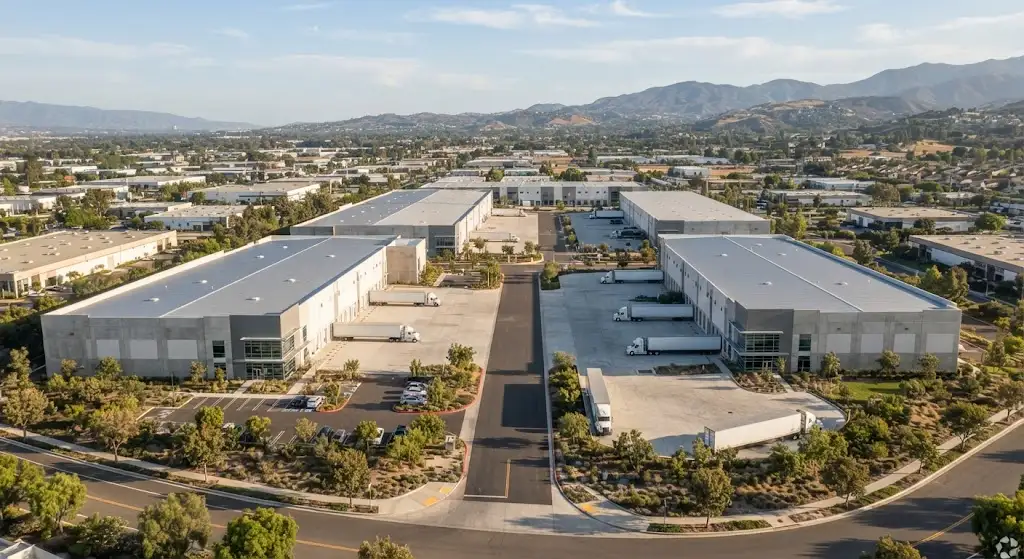
The development was planned across approximately 81.27 acres, with the approved specific plan allowing up to 1,688,000 square feet of warehouse, distribution, and fulfillment space. Its location within the San Gabriel Valley places it close to important Southern California transportation corridors, making the site relevant to businesses that depend on regional freight movement and industrial distribution.
For readers researching modern logistics facilities, the Arcadia Logistics Center provides a useful example of how location, warehouse design, transportation access, infrastructure, and industrial planning can work together to support supply chain operations.
What Is the Arcadia Logistics Center?
The Arcadia Logistics Center is a planned logistics and industrial development in the City of Arcadia, California. The project was established through a specific plan intended to support warehouse, distribution, logistics, and related industrial uses.
The City of Arcadia’s planning materials describe the development as a master-planned warehousing and logistics center on a reclaimed former sand and gravel quarry. The approved project included multiple buildings, loading areas, truck courts, parking, internal roads, utilities, landscaping, drainage infrastructure, and other site improvements.
The project therefore represents more than a single warehouse. It was designed as an integrated industrial environment capable of accommodating multiple logistics and business activities.
For a broader look at another logistics development, readers can also explore the REV Logistics Hankook operation and its role in tire supply chain activities.
Where Is Arcadia Logistics Center Located?
The Arcadia Logistics Center is located at 12321 Lower Azusa Road in Arcadia, California 91006.
The development sits near Interstate 605 and Lower Azusa Road, placing it within the wider San Gabriel Valley industrial and transportation network.
Its location is one of the most important aspects of the project because logistics facilities depend heavily on access to major roads, highways, distribution markets, and transportation infrastructure.
- City: Arcadia, California
- County: Los Angeles County
- Address: 12321 Lower Azusa Road
- ZIP Code: 91006
- Nearby freeway: Interstate 605
- Site area: Approximately 81.27 acres
Why the Location Matters for Supply Chain Operations
Location is one of the most important factors in warehouse and distribution planning. A facility that can connect efficiently with major transportation corridors can provide businesses with easier access to suppliers, customers, carriers, and regional markets.
The Arcadia Logistics Center was specifically planned with proximity to Interstate 605 in mind. The approved project documents identify highway access as an important component of the development’s logistics function.
For businesses involved in distribution, this type of transportation access can support the movement of goods between industrial facilities, warehouses, freight networks, and customers throughout Southern California.
The importance of transportation access can also be seen in other logistics operations. Our article on Aertssen Logistics and global supply chain operations provides another example of how logistics infrastructure supports large-scale freight movement.
From Former Quarry to Logistics Center
One of the distinctive characteristics of the Arcadia Logistics Center is the history of its site.
The property was formerly used as a sand and gravel quarry. The site later underwent reclamation before being redeveloped for industrial and logistics purposes.
The project therefore demonstrates how previously disturbed industrial land can be incorporated into a new economic and employment-generating use through planning, infrastructure investment, and redevelopment.
Rather than expanding into undeveloped land, the project was planned around the reuse of a reclaimed property within an existing urbanized region.
How Large Is the Arcadia Logistics Center?
The approved Arcadia Logistics Center Specific Plan covers approximately 81.3 acres and allows up to approximately 1.688 million square feet of warehouse, distribution, and fulfillment space.
The approved development framework divides the project into planning areas that can accommodate multiple buildings rather than requiring the entire site to operate as a single structure.
This approach gives an industrial development greater flexibility because different buildings can support different tenants, operational requirements, or industrial uses.
Arcadia Logistics Center Buildings
The development includes multiple industrial buildings designed for different business and logistics requirements.
Public project information from the development team identifies several buildings within the center, including facilities designed for warehousing, manufacturing, assembly, and other industrial applications.
Building 1
Arcadia Logistics Center Building 1 is identified as a 200,000-square-foot industrial building. The building was designed as a concrete tilt-up facility and includes features intended for warehousing, manufacturing, and assembly operations.
Its design includes a large truck court, loading infrastructure, clear interior height, fire protection systems, electrical capacity, skylights, and water-efficient landscaping.
Building 2
Building 2 is identified as a 330,000-square-foot industrial facility. It was developed to support warehousing, manufacturing, and assembly uses.
The building’s industrial specifications include a large truck court, warehouse clear height, fire protection infrastructure, skylights, substantial electrical service, and site-level water management features.
Building 3
Building 3 is identified as a 150,000-square-foot industrial facility developed for Samuel, Son & Co. The building includes warehouse improvements and infrastructure designed to support manufacturing operations.
The facility demonstrates how a logistics center can accommodate different industrial requirements rather than serving only traditional storage operations.
What Businesses Can Use a Logistics Center For
A modern logistics center can support several stages of a company’s supply chain.
Warehousing
Warehousing provides businesses with space to receive, store, organize, and prepare products for distribution.
Industrial warehouses can be configured around the requirements of different products and businesses, including storage density, loading requirements, inventory movement, and equipment access.
Distribution
Distribution facilities act as connection points between suppliers and customers. Products can arrive from manufacturers or other facilities and then move toward regional destinations.
The efficiency of this process depends on transportation planning, warehouse organization, inventory visibility, and coordination between different parties.
Fulfillment
Fulfillment operations involve preparing customer or business orders for shipment. Depending on the tenant and business model, this can include inventory handling, picking, packing, staging, and outbound transportation.
Manufacturing and Assembly
Some industrial facilities are designed to accommodate light manufacturing and assembly in addition to conventional warehousing.
This flexibility can allow businesses to combine production, storage, and distribution functions within the same broader industrial area.
For another perspective on specialized logistics services, see our guide to C&S Logistics and supply chain solutions.
Key Infrastructure at the Arcadia Logistics Center
A logistics development requires more than warehouse buildings. The surrounding infrastructure must allow trucks, employees, products, utilities, and other activities to operate safely and efficiently.
The Arcadia Logistics Center project includes infrastructure and site improvements such as:
- Truck courts
- Loading areas
- Private internal streets
- Paved parking areas
- Drive aisles
- Utility infrastructure
- Drainage facilities
- Water-quality features
- Landscaping
- Lighting
- Fencing and gates
- Property walls and site improvements
These components are important because warehouse productivity depends on the entire site functioning as a coordinated system.
Truck Courts and Loading Operations
Truck courts are a critical component of modern logistics facilities. They provide the maneuvering space required for commercial vehicles to access loading areas.
A properly designed truck court can help separate truck movement from other site activities while providing space for loading and unloading operations.
Loading bays are similarly important because they form the physical connection between warehouse inventory and transportation equipment.
For high-volume distribution operations, efficient truck access can directly affect how quickly products move through a facility.
Technology and Modern Supply Chain Management
Physical infrastructure is only one part of a modern logistics operation. Technology can also play an important role in inventory management, shipment coordination, warehouse planning, and transportation visibility.
Depending on the individual business and tenant, modern logistics operations may use warehouse management systems, transportation management systems, barcode scanning, electronic documentation, inventory tracking, and automated reporting.
These technologies can help businesses understand where inventory is located, what orders are ready for shipment, and how transportation resources are being used.
Businesses interested in the technology side of modern operations can also read about how digital platforms can improve operational speed.
Sustainability Features
The Arcadia Logistics Center project incorporated several environmental and resource-management features into its planning and building design.
Project documents describe features including water-efficient landscaping, stormwater retention and infiltration infrastructure, energy-efficiency guidelines, and the potential use of rooftop solar generation.
Individual buildings within the center have also been developed with features such as skylights, water-efficient landscaping, and stormwater management systems.
These measures demonstrate how modern industrial projects can incorporate resource-management considerations into warehouse and logistics infrastructure.
Economic and Employment Role
Large industrial developments can have an impact beyond the movement of goods. Warehouses, manufacturing facilities, transportation services, property management, maintenance, and supporting businesses can create employment opportunities and contribute to local economic activity.
The City of Arcadia’s planning documents identified economic and employment growth among the objectives of the Arcadia Logistics Center project.
The development was also intended to diversify the city’s industrial and employment-generating land uses while making productive use of the reclaimed property.
Arcadia Logistics Center and the Southern California Logistics Network
The center should be understood as one component of a much larger Southern California logistics ecosystem.
Goods moving through the region can pass through manufacturers, ports, intermodal facilities, distribution centers, warehouses, trucking networks, fulfillment facilities, and final delivery points.
Each facility serves a particular role in the overall supply chain.
The Arcadia Logistics Center contributes warehouse and industrial capacity within the San Gabriel Valley, while transportation connections provide access to the wider Los Angeles-area freight network.
Our article about Kerriedaway Logistics and global freight operations provides additional context on how different logistics providers participate in international and domestic freight networks.
Why Industrial Location Matters
Businesses selecting warehouse or industrial facilities typically consider several location-related factors.
- Access to major highways
- Distance from customers and suppliers
- Availability of transportation providers
- Regional labor availability
- Warehouse size and configuration
- Truck access and loading infrastructure
- Utility capacity
- Local zoning and permitted uses
- Operating costs
- Future expansion requirements
The Arcadia Logistics Center was planned with many of these considerations in mind, particularly highway access, industrial infrastructure, warehouse capacity, and the reuse of an existing reclaimed site.
What Makes the Arcadia Logistics Center Different?
Several characteristics distinguish the project from a simple standalone warehouse.
Master-Planned Development
The center was planned as a coordinated logistics and industrial development rather than an isolated warehouse building.
Large Development Footprint
The approved plan accommodates a substantial amount of industrial and logistics space across multiple buildings.
Transportation Access
The location near Interstate 605 provides an important connection to the broader Los Angeles-area transportation network.
Reclaimed Industrial Property
The project repurposed a former quarry site for modern industrial and logistics uses.
Flexible Industrial Uses
The development framework allows uses that can include warehousing, distribution, fulfillment, manufacturing, assembly, and related industrial activities.
Frequently Asked Questions
Where is the Arcadia Logistics Center?
The Arcadia Logistics Center is located at 12321 Lower Azusa Road in Arcadia, California 91006, near Interstate 605.
How large is the Arcadia Logistics Center?
The approved specific plan covers approximately 81.27 acres and allows up to about 1.688 million square feet of warehouse, distribution, and fulfillment space.
What is the Arcadia Logistics Center used for?
The development supports industrial activities including warehousing, distribution, fulfillment, manufacturing, assembly, and related logistics uses.
Was the Arcadia Logistics Center built on a former quarry?
Yes. The project was planned on a reclaimed former sand and gravel quarry site in the Lower Azusa Road area.
Is Arcadia Logistics Center near a major freeway?
Yes. The development is located close to Interstate 605, providing access to an important Southern California transportation corridor.
How does the center support supply chain operations?
Its combination of industrial buildings, loading areas, truck courts, internal roads, warehouse space, and transportation access allows businesses to perform storage, distribution, fulfillment, and related industrial activities.
Are all buildings at the center used only for warehousing?
No. The development framework accommodates several industrial uses, including warehousing, manufacturing, assembly, fulfillment, and distribution.
Conclusion
The Arcadia Logistics Center is an example of how a large industrial development can combine warehouse capacity, transportation access, infrastructure, and flexible industrial uses within a master-planned site.
Its location at Lower Azusa Road near Interstate 605 gives it an important connection to the Southern California transportation network, while its reclaimed-site history demonstrates how former industrial land can be repositioned for modern economic uses.
For businesses researching warehouse and distribution infrastructure, the project also illustrates why factors such as building configuration, truck access, loading facilities, highway connectivity, utilities, and site planning all matter when evaluating logistics capacity.
As supply chains continue to rely on interconnected warehouses, transportation providers, manufacturers, and distribution centers, facilities such as the Arcadia Logistics Center remain important pieces of the wider logistics network.
For more logistics, business, and supply chain coverage, visit PostingNest.