






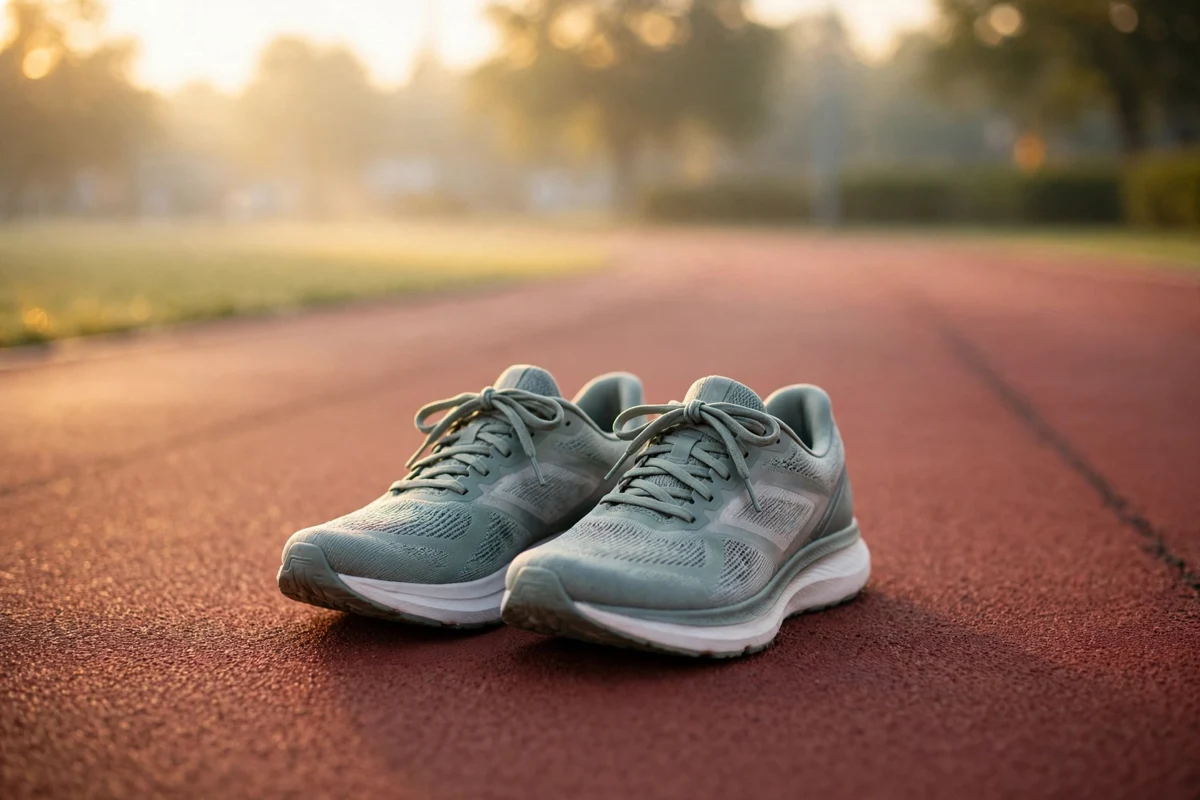
The right pair of running shoes makes training feel easier from the first stride. The wrong pair announces itself in blisters, aching knees and shoes quietly abandoned after a month. Knowing how to choose running shoes is mostly about two kinds of honesty: how your feet are actually built, and where you will actually run. This guide explains how to read your foot type, how to choose running shoes for different surfaces, how a shoe should fit in the shop, what the cushioning jargon really means, and the buying mistakes that catch out beginners and experienced runners alike.
Start with your feet: arches and pronation
Every fitting decision flows from your feet, so start there. The quickest home check is the wet-foot test: wet the sole of your foot, step on a piece of cardboard or a dry bathroom tile, and look at the print. A full, wide print suggests a flatter arch; a print showing mainly the heel and the ball of the foot, joined by a thin line, suggests a higher arch; most runners fall somewhere between the two.
Arch shape connects to pronation — the natural inward roll of the foot as it lands. Runners with flatter feet often overpronate, rolling inwards more, and may prefer shoes with some structured support. Neutral runners with medium arches generally do well in neutral cushioned shoes. You do not need to diagnose yourself perfectly: a specialist running shop can watch you jog for a minute and point you to the right shelf, and that free advice is worth more than any online quiz.
How to choose running shoes for where you run
Surface decides the shoe family. Road shoes are built for pavements and treadmills: lighter, smoother soles and cushioning tuned for repetitive impact on hard ground. Trail shoes have deeper lugs for grip on mud and gravel, tougher uppers and often a protective plate underfoot. If you split your week between surfaces — a parkrun on grass, weekday miles on the road — a versatile road shoe usually covers more ground than a specialised one.
Training environment matters too. If some of your sessions happen indoors or on a track at facilities like the Gutchess Lumber Sports Complex, a lighter road shoe will feel at home, while heavy trail lugs will feel clumsy and wear quickly on hard floors. Match the shoe to the surface you use most, not the one you use most dramatically.
Getting the fit right in the shop
Fit is the part of how to choose running shoes that no review can decide for you. Aim for roughly a thumb’s width of space between your longest toe and the end of the shoe, because feet swell and slide forward as you run. The heel should feel held without slipping, the midfoot snug without squeezing, and the toe box wide enough for your toes to spread naturally.
Try shoes late in the day, when your feet are at their largest, and wear the socks you actually run in. Always try both shoes — most people have one foot slightly bigger — and jog a few strides, ideally down a slope or on the shop treadmill, because a shoe that feels fine standing still can rub at running pace. Ignore the size number printed on the box: sizing varies between brands and models, so the number that fits is the one that fits, whatever it says.
Cushioning, drop and weight: what the jargon means
Three terms dominate shoe descriptions. Cushioning is the foam underfoot: softer, thicker stacks absorb more impact and suit longer or easier runs, while firmer, thinner shoes feel more responsive. Drop is the height difference between heel and forefoot — a higher drop shifts load towards the calves and Achilles, a lower drop towards the feet and ankles; there is no universally best figure, only what your body is used to. Weight matters less than beginners fear: a slightly heavier, comfortable shoe beats a featherlight one that hurts.
For most new runners, the sweet spot is a moderately cushioned, neutral daily trainer from any reputable range. It handles easy miles, longer weekend runs and the occasional faster session, including cross-training days — many runners mix in cycling, and our Diamondback Trace dual sport bike guide is a useful starting point if you are building a low-impact training day. Indoor facilities such as the Trinity Health Sports Dome make that mix easier in winter, when road miles are hardest to bank.
When to replace your running shoes
Running shoes wear out from the inside. The foam midsole gradually loses its spring long before the upper looks tired, so judge your shoes by feel as much as appearance: a shoe that suddenly feels flat, an outsole worn smooth in your strike zone, or new niggles in your shins and knees after ordinary runs are all classic signals. Keeping a simple note of each pair’s mileage in your training log makes the pattern easy to spot.
Runners who train away from home need a plan B — the travel healthcare staff in our guide to travel STNA jobs are a good example of people who keep a dedicated, broken-in pair in their kit. Rotating two pairs, if your budget allows, also extends the life of both: the foam gets a day to recover between runs, and you always have a dry pair ready.
Mistakes to avoid when buying
The most common error is buying on looks or on a discount rather than on fit — the shoe you admire in the Shine Lifestyle Shop sense of style still has to survive mile nine. Close behind: copying a friend’s favourite model (their feet are not your feet), sizing running shoes like tight street shoes, and falling for the most technical-sounding shoe in the shop when a simpler one fits better. Finally, rest is part of training, so plan your recovery days as deliberately as your shoe choice — our guide to entertainment centers is a good place to start.
Learning how to choose running shoes takes one honest fitting and a little patience. Start with your arches, match the shoe to your surface, insist on thumb-room and a secure heel, and let comfort — not marketing — make the final call. Do that, and the pair you buy will quietly do its job for hundreds of miles while you get on with enjoying the run.