







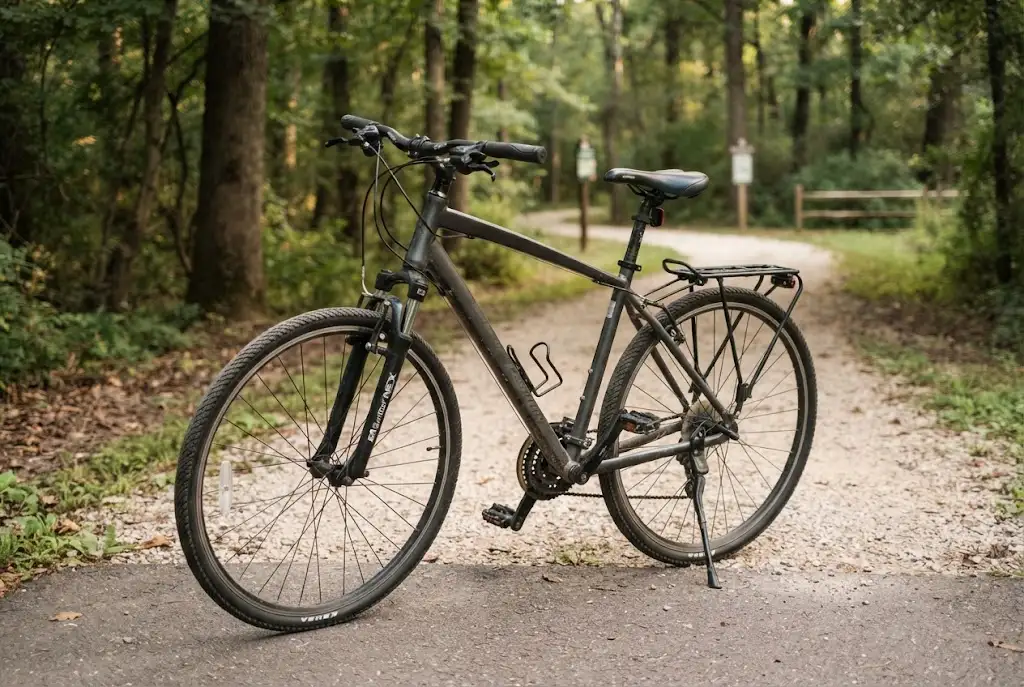
Diamondback Trace Dual Sport: A Practical Guide to This Versatile Hybrid Bike
The Diamondback Trace Dual Sport is an older hybrid-style bicycle designed to bridge the gap between everyday road riding and light off-road use. Instead of being built strictly as a road bike or a mountain bike, the Trace combines an upright riding position, wide tires, suspension on some versions, and a relatively efficient wheel setup for riders who want flexibility.
That makes the Trace particularly interesting for commuters, recreational cyclists, fitness riders, and anyone looking for a used bicycle that can handle paved streets as well as gravel paths and smoother dirt surfaces.
One important point for shoppers is that the Trace was produced in different model years and configurations. Components changed over time, so a used Diamondback Trace should be evaluated by its exact year, frame size, drivetrain, brakes, fork, wheels, and overall condition rather than by the model name alone.
What Is the Diamondback Trace Dual Sport?
The Diamondback Trace belongs to the dual-sport hybrid category. Diamondback’s own historical description of the Trace series positioned it between commuter and mountain-bike riding, with an emphasis on efficient pavement riding while retaining a familiar, comfortable control layout.
The basic concept is straightforward: give riders a bicycle that feels comfortable on roads but is not limited to perfectly smooth pavement. Depending on the model year, the Trace can feature an aluminum frame, 700c wheels, relatively wide tires, multiple gears, and a suspension fork.
This combination makes it different from a traditional road bike. It is also different from a dedicated mountain bike, which is generally designed for more demanding terrain and technical trails.
Diamondback Trace Dual Sport Specifications
Specifications vary by model year, so buyers should confirm the exact configuration of the bicycle they are considering. Archived examples of the Trace show several useful characteristics that help explain how the bike was designed.
| Component | Example Trace Configuration |
|---|---|
| Frame | 6061-T6 butted aluminum dual-sport frame |
| Wheel size | 700c |
| Front suspension | Suspension fork on applicable versions |
| Drivetrain | Triple-chainring setup with multiple rear gears on older configurations |
| Tires | Wide dual-sport tires designed for pavement and light off-road surfaces |
| Handlebar | Low-rise flat-style handlebar |
| Frame sizes | Multiple sizes depending on model year |
For example, an archived 2017 Trace configuration used a 6061-T6 aluminum frame, an SR Suntour NVX HLO suspension fork with 75 mm of travel, a Shimano 3×8 drivetrain, Tektro Aries disc brakes, and Kenda dual-sport tires. Earlier versions used different components, which is why model-year identification matters when researching specifications.
Frame Design and Riding Position
The Trace’s aluminum frame is one of the reasons it works well as a general-purpose bicycle. Aluminum provides a practical balance between weight, durability, and cost, making it common in hybrid bikes intended for everyday riding.
The geometry also favors a relatively upright and controlled riding position instead of the stretched posture associated with performance road bikes.
For commuting and recreational riding, this can make the bicycle easier to manage in traffic and more comfortable when the rider is not trying to maintain racing speeds.
700c Wheels and Dual-Sport Tires
Wheel and tire selection is central to the Trace’s identity. Its 700c platform is well suited to road riding, while wider tires give the bicycle more flexibility than a narrow-tire road bike.
Depending on the exact Trace version, tire specifications differ. Historical examples include tires designed specifically for dual-sport use, providing a compromise between rolling efficiency on pavement and additional grip on gravel or packed dirt.
This setup is most useful for riders who regularly move between different surfaces. A paved commute can be followed by a ride on a maintained multi-use path without requiring a dedicated second bicycle.
Suspension Fork: What It Adds
Some Diamondback Trace configurations use a front suspension fork. On a hybrid bicycle, the primary benefit is additional comfort and control when riding over rough pavement, potholes, gravel, and other uneven surfaces.
It is important not to confuse this with the suspension system found on a modern full-suspension mountain bike. The Trace’s front suspension is intended to improve versatility and comfort rather than turn the bicycle into a technical-trail machine.
If you are buying a used Trace with suspension, inspect the fork carefully. Check for oil leakage, excessive play, corrosion, damaged stanchions, unusual noises, and signs that the fork has not been maintained.
Drivetrain and Gearing
The Trace was offered with multi-speed drivetrains that gave riders a broad range of gearing for everyday riding.
Older configurations used triple chainrings paired with rear cassettes, while later versions could use different Shimano components and gearing combinations. The purpose is the same: provide easier gears for climbs and lower-effort riding while retaining higher gears for flatter roads.
When inspecting a used Trace, shift through every available gear. Pay attention to:
- Delayed or incomplete shifting
- Skipping under pedaling pressure
- Excessive chain noise
- Worn chainrings or cassette teeth
- Damaged derailleur components
- Frayed or poorly adjusted cables
A bicycle with an older but properly maintained drivetrain can still be useful, while a neglected drivetrain may require enough replacement work to change the economics of a used-bike purchase.
Brakes on the Diamondback Trace
Brake equipment varies between Trace model years. Historical versions have appeared with both linear-pull-style braking systems and disc-brake configurations.
That distinction is important when comparing used bicycles. Do not assume that every Diamondback Trace has the same braking system simply because the frame carries the same model name.
Before buying, inspect the brake pads, rotors or rims as applicable, cables, levers, and mounting hardware. The brakes should engage smoothly and provide predictable stopping power without excessive lever travel or unusual noise.
Where the Diamondback Trace Dual Sport Works Best
Urban Commuting
The Trace’s hybrid design makes it suitable for everyday city riding. Its upright position can provide good visibility and control, while wider tires are more forgiving of imperfect pavement than narrow road-bike tires.
For commuting, practical additions such as lights, a rear rack, fenders, and a lock can make the bicycle considerably more useful.
Fitness Riding
The Trace can also work as a fitness bicycle for riders who want to build regular cycling into their routine without using a dedicated road-racing bike.
The multi-speed drivetrain provides flexibility for different gradients, while the hybrid geometry makes it suitable for moderate-distance recreational rides.
Gravel and Multi-Use Paths
Light gravel and maintained dirt paths are closer to the bike’s intended dual-sport role than highly technical mountain trails.
Before taking an older Trace onto rough surfaces, check the tires, wheels, headset, bottom bracket, fork, and drivetrain. The condition of a used bicycle is often more important than its original specification.
Is the Diamondback Trace a Mountain Bike?
No. The Diamondback Trace is better understood as a dual-sport hybrid bike.
It can handle some surfaces that a road bike may not be ideal for, but that does not make it a substitute for a modern mountain bike built for rock gardens, jumps, steep technical descents, and demanding singletrack.
If your riding consists primarily of paved streets, bike paths, gravel roads, and maintained trails, the Trace’s design makes sense. If you plan to ride technical mountain-bike trails, a purpose-built mountain bike is a better choice.
Who Should Consider a Diamondback Trace?
The Trace can make sense for several types of riders, especially when found in good mechanical condition on the used market.
- Commuters: Riders who need a practical bicycle for everyday transportation.
- Recreational cyclists: People who want one bike for casual road and path riding.
- Fitness riders: Cyclists looking for a versatile platform for regular exercise.
- Beginner cyclists: Riders who prefer a stable hybrid-style setup over an aggressive road-bike position.
- Budget-conscious buyers: Shoppers considering an older bicycle rather than purchasing a new model.
Who Should Look Elsewhere?
The Trace may not be the right choice for every cyclist.
Riders focused on high-speed road cycling may prefer a lighter road-oriented bicycle with narrower tires and drop handlebars. Riders planning technical mountain-bike trails should consider a modern mountain bike with components designed specifically for that environment.
Likewise, someone seeking a current-production bicycle with the latest drivetrain, braking, suspension, and frame technology should compare the Trace with newer models rather than treating an older Trace as a direct equivalent.
What to Check When Buying a Used Diamondback Trace
Because the Trace is an older bicycle line, condition should be a major part of the buying decision. A careful inspection can help avoid unexpected repair costs.
1. Inspect the Frame
Look closely around the head tube, bottom bracket area, seat tube, chainstays, and dropout areas. Search for cracks, dents, severe corrosion, or evidence of a major impact.
2. Check the Wheels
Spin both wheels and watch for significant side-to-side movement or obvious damage. Inspect the rims, spokes, hubs, and tires.
3. Test the Drivetrain
Shift through the gears while applying moderate pedal pressure. The chain should move between gears without persistent skipping or grinding.
4. Examine the Fork
If the bicycle has a suspension fork, check its condition and operation. Look for leakage, damaged surfaces, excessive play, or signs of neglected maintenance.
5. Test the Brakes
Test the front and rear brakes independently. They should engage predictably and provide enough stopping power for the riding conditions you intend to encounter.
6. Confirm the Frame Size
A correctly sized bicycle is more important than simply finding the cheapest Trace available. Check the manufacturer’s or seller’s sizing information for the specific frame configuration, then compare it with your height and preferred riding position.
Diamondback Trace Dual Sport vs. a Modern Hybrid Bike
| Factor | Older Diamondback Trace | Modern Hybrid Bike |
|---|---|---|
| Availability | Primarily found through used-bike channels | Commonly available as current models |
| Components | Older-generation parts | Generally newer drivetrain and braking options |
| Technology | Depends heavily on model year | Usually benefits from newer component designs |
| Value | Can be attractive when purchased in good condition | Higher initial cost is common |
| Maintenance | Condition and replacement-part availability matter | New-bike warranty and support may be available |
The better option depends on your budget, intended use, mechanical confidence, and the condition of the specific bicycle. An inexpensive used Trace that needs major repairs is not necessarily a better value than a newer entry-level hybrid.
How to Decide if a Used Trace Is Worth Buying
Start with the bicycle’s mechanical condition rather than its original retail reputation. Ask the seller for the model year and component details. If possible, inspect and test ride the bicycle before paying.
Consider the likely cost of replacing consumable parts such as tires, tubes, brake pads, cables, chain, and drivetrain components. Also consider whether the fork or wheels require service.
The right purchase is a Trace that matches your riding needs and is mechanically sound enough that the total cost remains reasonable.
Diamondback Trace Dual Sport: Pros and Cons
Potential Advantages
- Versatile hybrid-oriented design
- Comfortable for everyday recreational riding
- Suitable for pavement and light off-road surfaces
- Aluminum frame on many configurations
- Multiple gears for varied terrain
- Wide tires compared with traditional road bikes
- Potentially affordable on the used market
Potential Drawbacks
- It is an older bicycle platform
- Specifications differ significantly by model year
- Used examples can require maintenance or replacement parts
- Not designed for serious technical mountain biking
- Older components may not match current bicycle technology
- Availability depends heavily on the used market
Is the Diamondback Trace Dual Sport Still Worth Considering?
Yes, but mainly in the context of the used-bike market.
The Trace’s strongest feature is its basic concept: one bicycle that can cover several everyday riding situations without being specialized for only one environment. That remains useful for commuters, recreational cyclists, and riders who want a practical fitness bike.
However, buyers should not evaluate an older Trace as if it were a current-production bicycle. Its exact components, condition, service history, and frame size should determine its value.
For anyone researching historical Trace specifications, archived cycling retailers and Diamondback’s historical material can also be useful because the component package changed across model years.
Frequently Asked Questions
Is the Diamondback Trace Dual Sport good for commuting?
Yes. Its hybrid-oriented geometry, 700c wheel platform, multiple gears, and relatively wide tires make the Trace suitable for many forms of everyday commuting, especially on paved roads and bike paths.
Can the Diamondback Trace handle gravel?
Many Trace configurations are suitable for light gravel and maintained dirt paths. Tire condition and specification matter, and rough technical terrain is outside the bicycle’s intended role.
Is the Diamondback Trace a road bike?
No. It is better categorized as a dual-sport hybrid. It is designed to provide more versatility than a traditional road bike.
Is the Diamondback Trace a mountain bike?
No. Although some versions include front suspension and can handle light off-road riding, the Trace is not designed as a dedicated technical mountain bike.
What size Diamondback Trace should I buy?
Choose the frame size according to the specific model year’s sizing information and your body dimensions. Historical Trace models were offered in several frame sizes, so verify the exact bicycle before purchasing.
Is the Diamondback Trace still sold new?
The Trace is an older model rather than a prominent current-production model in Diamondback’s present catalog. Buyers today will generally need to evaluate used examples or compare it with newer Diamondback and competing hybrid bikes.
Final Verdict
The Diamondback Trace Dual Sport remains an interesting option for cyclists who want a flexible bicycle for commuting, fitness riding, paved paths, and light off-road adventures. Its hybrid design gives it a useful middle ground between road-oriented and mountain-oriented bicycles.
The key is to buy the specific bicycle, not simply the model name. Because Trace specifications changed across model years, inspect the frame, fork, wheels, brakes, drivetrain, tires, and overall maintenance condition before making a purchase.
For historical specifications, component comparisons, and model-year research, use established cycling retailers and archived product information rather than assuming every Trace has the same equipment.