




You do not need a racing bike, a wardrobe of Lycra or a training plan with colour-coded zones to start cycling for fitness. You need a bike that works, a helmet that fits, and about twenty minutes. Cycling is one of the gentlest ways to build real fitness: it raises your heart rate without pounding your knees, it scales from easy spins to serious workouts on the same machine, and — unlike a gym membership — the ride itself can become the part of the day you look forward to.
This beginner’s guide covers what actually matters in your first two months: choosing and setting up a bike, staying safe, building distance without burning out, and avoiding the handful of mistakes that make new cyclists quit.
Choosing a Bike That Suits the Riding You Will Do
Beginners often buy for the cyclist they imagine becoming rather than the one they are. If most of your riding will be on roads, cycle paths and the occasional park trail, a hybrid bike is the honest answer: upright position, forgiving gears, tyres wide enough for comfort. A road bike is faster but less forgiving; a mountain bike is sturdy but heavy work on tarmac.
Fit matters more than price. When you straddle the frame you should have a little clearance, and when seated with a pedal at the bottom of its stroke, your knee should keep a slight bend. A saddle set too low is the single most common cause of beginner knee pain, so raise it gradually until your hips stop rocking as you pedal. Any decent bike shop will help with a basic fit, and a second-hand bike in the right size beats a new one that fights you.
Whatever you ride, budget for the unglamorous essentials: a helmet, a pump, a spare inner tube, tyre levers and a small multi-tool. Learning to fix a puncture at home, once, in daylight, is what turns a ride-ending disaster into a ten-minute pause.
Your First Rides: Short, Flat and Frequent
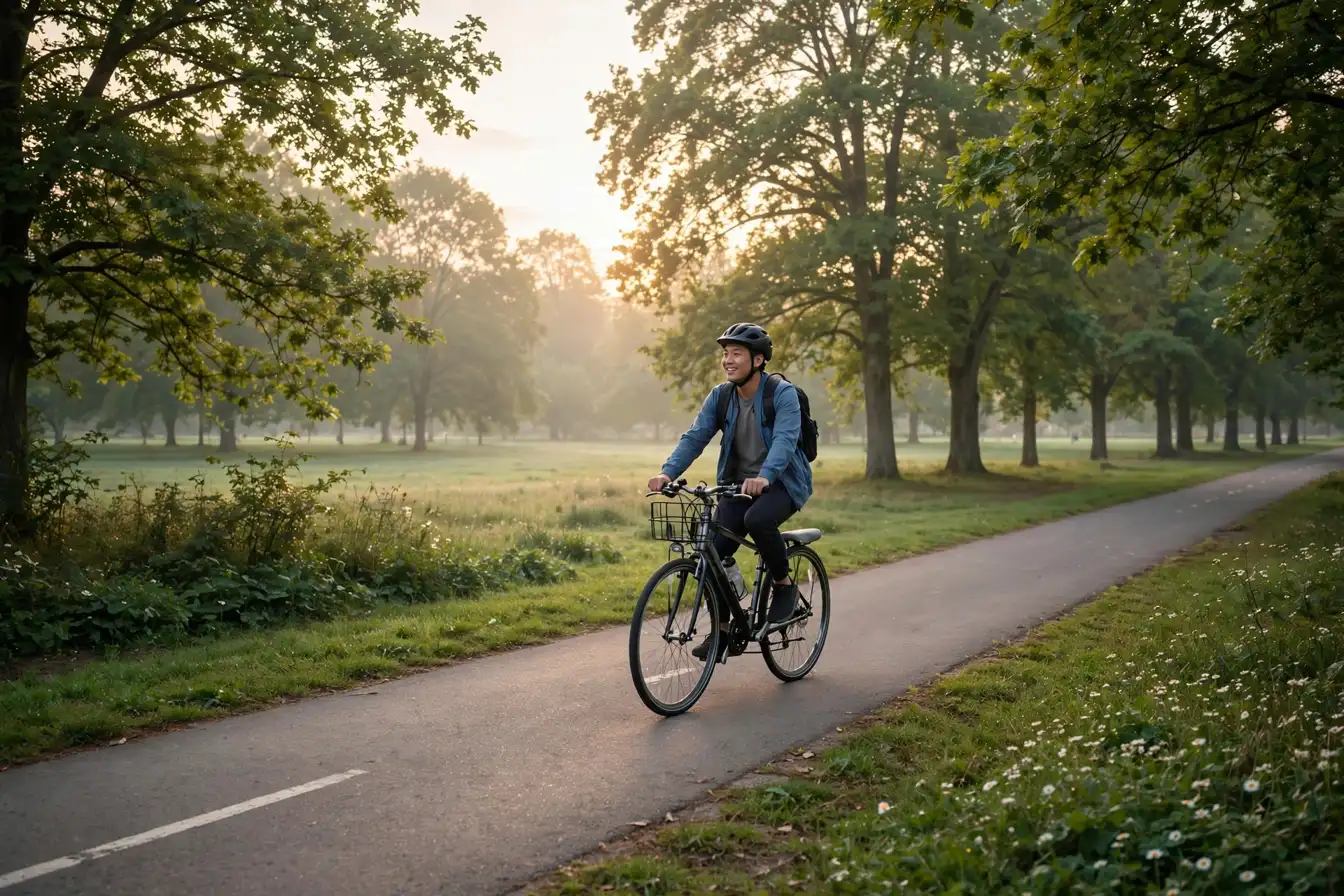
The biggest beginner mistake is treating the first ride like a test. Start with twenty to thirty minutes on the flattest, quietest route you can find — a park loop or a cycle path is ideal — and ride at a pace where you could still hold a conversation. If you cannot talk, you are going too hard for base fitness, whatever your legs are telling you.
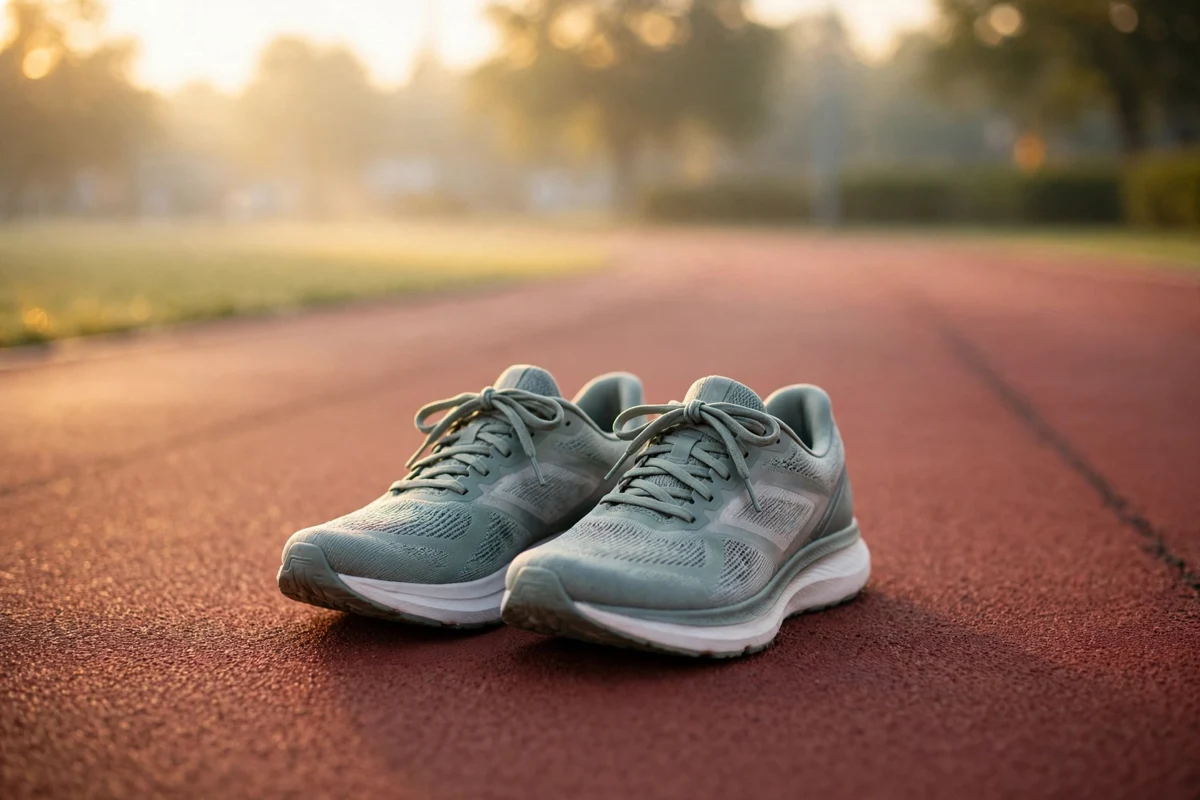
Three short rides a week will do more for a beginner than one heroic Sunday ride followed by six days of sore legs. Frequency teaches your body the pedalling motion, toughens the contact points (hands, feet, saddle area — all adapt within a few weeks) and builds the habit. If you are coming from another sport, the same kit logic applies: comfort and fit beat raw specifications, just as we explain in our guide to choosing running shoes that fit your feet and your goals.
Increase gradually. Add five or ten minutes to one ride each week, or extend your longest ride by roughly ten percent. Within six to eight weeks, most beginners comfortably reach rides of an hour — a distance that felt impossible in week one.
Gears, Cadence and Hills Without the Drama
New riders tend to push big gears slowly, grinding against resistance. Your knees prefer the opposite: an easier gear and a quicker, lighter pedal stroke. Aim for a smooth, brisk cadence where your legs feel busy but not strained. When the road tilts up, change down early — before your speed collapses — and stay seated, spinning up the hill rather than standing and wrestling the bike.
Downhill, the rules reverse: brake gently with both brakes, look where you want to go rather than at the obstacle you fear, and give yourself more stopping distance in the wet. Confidence on descents comes from repetition on familiar roads, so keep early rides on routes you know.
Staying Safe and Visible
Most cycling safety is unglamorous: be predictable, be visible, assume you have not been seen. Ride in a straight line, signal before turning, and take the lane position that keeps you out of the gutter and out of the “door zone” beside parked cars. Lights are not only for night — a flashing rear light on a grey afternoon is cheap insurance.
A helmet only works if it fits: level on the head, straps snug, no wobble when you shake your head. Replace it after any crash, even if it looks undamaged. And tell someone your route on longer rides, or share your location from your phone — a small habit that costs nothing.
What to Eat, Drink and Wear
For rides under an hour, water is enough; you do not need sports drinks or gels. Drink before you feel thirsty, eat a normal meal a couple of hours before longer rides, and have something with a little protein and carbohydrate within an hour afterwards. Padded shorts are the one clothing purchase worth making early — they prevent the soreness that beginners wrongly blame on the saddle itself.
Cycling also pairs well with a general reset of your habits. Many new riders find the bike becomes their easiest screen-free hour of the day; if that appeals, our guide to taking a proper break from screens has ideas for protecting that time.
A Simple Four-Week Starter Plan
- Week 1: Three rides of 20–25 minutes, easy pace, flat routes. Practise gears and signalling somewhere quiet.
- Week 2: Three rides of 30 minutes. Add one gentle hill to your favourite route.
- Week 3: Two rides of 30 minutes plus one of 45. Try a slightly longer loop and carry tools and a tube.
- Week 4: Two rides of 35–40 minutes plus one ride of about an hour, with a café stop allowed — encouraged, even.
Rest days are part of the plan, not a failure of it. Fitness improves while you recover, and the goal of the first month is simply to finish it wanting to ride in month two.
Mistakes That Make Beginners Quit
Going too hard, too soon. Sore legs and dread are not signs of a good programme; they are signs of an unsustainable one. Easy most of the time is the rule that works.
Comparing yourself to experienced riders. The cyclist who flew past you has a five-year head start. Compare this week’s ride to last week’s.
Skipping maintenance. A dry chain and soft tyres make every ride feel harder than it is. Five minutes with a pump and a cloth each week keeps the bike feeling new.
Having nowhere to ride to. Pure exercise loops work for some people, but many beginners stick with cycling when it becomes useful or social: riding to a market, meeting a friend, or exploring a new neighbourhood. Our road trip planning guide makes the same point for longer journeys — a destination turns effort into an outing.
The Bottom Line
Starting cycling for fitness is refreshingly simple: a bike that fits, short and frequent easy rides, gears used early and often, and patience with the first fortnight while your body adapts. Build gradually, keep the rides enjoyable, and within two months you will have a form of exercise that doubles as transport, fresh air and thinking time. That combination — fitness you actually look forward to — is why so many beginners are still riding years later.
Keep Reading
If you found this useful, these related guides from our team go deeper on nearby topics: