




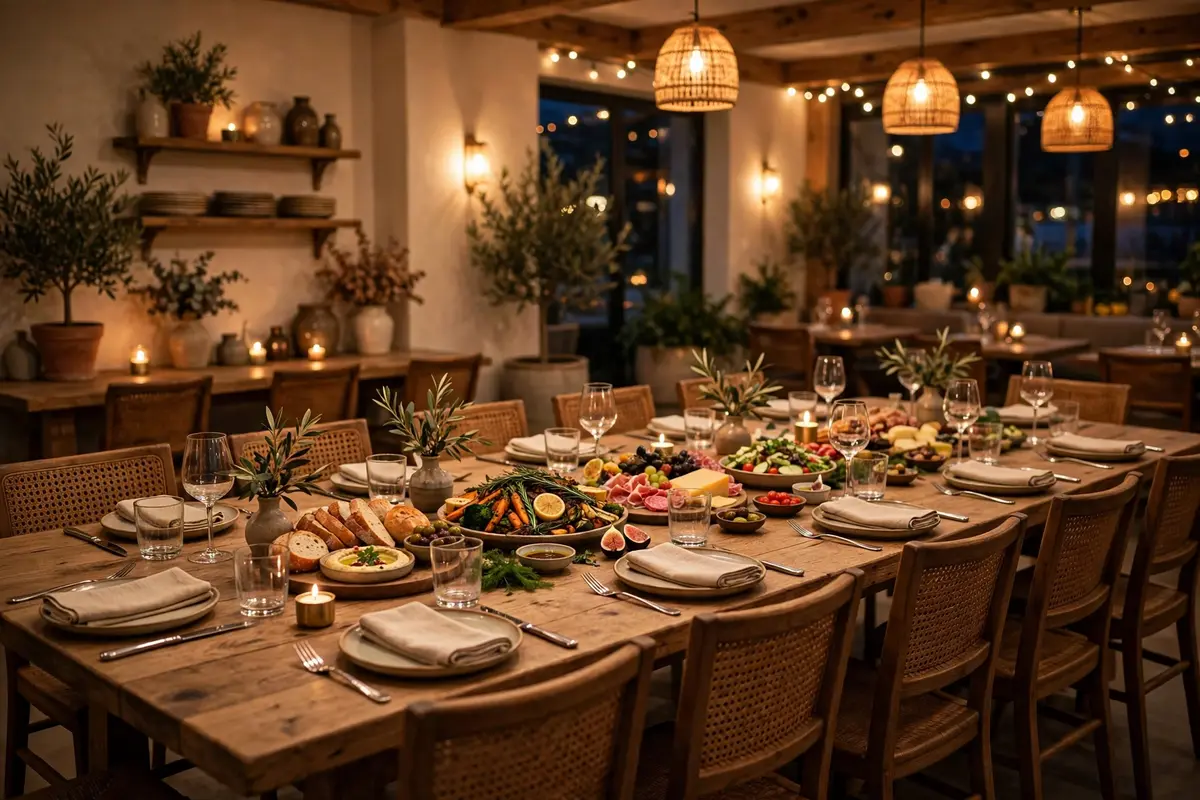


Choosing a restaurant for a group dinner is a different job from picking a place for two. With two people, almost anywhere works. With eight or ten, the wrong choice means a table where nobody can hear each other, a menu that leaves two guests with nothing to eat, and a bill that turns awkward at the end of the night. The good news is that group disasters are almost always predictable, and a ten-minute check before you book prevents nearly all of them.
Whether you are organising a birthday, a work celebration or a long-overdue catch-up with friends, this guide covers the five things that matter most: space, menu, noise, budget and booking policies, plus how to handle the details most organisers forget.
Start With the Table: Space and Seating
The first question is not what the food is like, but whether the room works. A group needs a table where everyone can see and hear most of the group; long banquet tables suit speeches, while a round table is better for conversation. When you call, ask directly: What is your largest table? Will we be split across two tables? Is there a private or semi-private area, and does it carry a minimum spend?
Think about who is coming. Older relatives may need step-free access and chairs with backs rather than stools or benches. Families with children need space for a pushchair and a kitchen that can serve the kids early. None of this is visible on a booking app, which is why one phone call beats twenty minutes of scrolling photos.
Check the Menu for the Whole Group
A menu that thrills you can quietly fail your group. Look for range rather than a single famous dish: at least a couple of vegetarian options that are real meals rather than afterthoughts, something plain for cautious eaters, and dishes that can be adapted for allergies and dietary requirements. Set menus and sharing formats are often the smartest choice for groups because they simplify ordering and keep the kitchen fast; many group-friendly places, like the places in our guide to must-visit food places in New York, will happily suggest a set format if you ask when booking.
If you are choosing between cuisines, think about how the food is served. Sharing-style cuisines (mezze, tapas, family-style Chinese or Korean dishes) naturally suit groups and keep the table lively; a tasting-menu restaurant, however wonderful, runs to its own schedule and can make a relaxed evening feel rushed. For a crowd-pleasing example, look at how a busy dining room like Chopstix Chinese Restaurant handles family-style dishes that everyone can share.
Noise: The Factor Everyone Forgets
Here is the test most organisers skip: if you cannot comfortably talk across the table, the evening fails no matter how good the food is. Hard floors, bare walls, high ceilings and a busy bar all push the volume up. Restaurants that look calm and pretty in daytime photos can be loud at 8 p.m. on a Friday.
Practical ways to check: read recent reviews and search them for the word “loud”; book earlier in the evening when the room is calmer; or ask the restaurant honestly, “We have guests in their seventies, will they hear the conversation?” Staff answer this question every week and will usually steer you to the right night or the quieter corner of the room.
Agree the Budget Before You Book
Money awkwardness ruins more group dinners than bad food does. Before booking, settle three things with yourself: the rough price per head including drinks, whether the bill will be split evenly or by what people ordered, and whether service charges or a group booking fee apply. Then communicate it kindly but clearly in the group chat: “Budget is around this much per person, and we will split the bill evenly unless anyone prefers otherwise.”
Restaurants can help. Many will offer a fixed-price set menu for groups of eight or more, which removes surprises entirely, and some allow a pre-agreed drinks package. If one person is treating the group, say so in advance so guests are not ordering cautiously all night. For smaller local options, our guide to the top restaurants in Gainesboro, TN shows how much easier planning gets when menus and prices are clear up front.
Booking Policies That Catch Groups Out
Group bookings come with rules that solo diners never meet. Ask about:
- Deposits: Many restaurants take a per-head deposit for large tables, usually deducted from the final bill.
- Pre-ordering: Groups above a certain size may need to order mains in advance; build the deadline into your group chat.
- Cake and decorations: Some venues charge a serving fee for outside cakes; others welcome them. Ask before you arrive carrying one.
- Time limits: Weekend tables often come with a two-hour window. If your group likes to linger, book the later sitting.
- Final numbers: Confirm when the restaurant needs your exact headcount, and over-confirm with your guests the day before.
Tell the Restaurant About Dietary Needs Early
One more detail separates smooth group dinners from stressful ones: tell the restaurant about allergies and dietary requirements when you book, not when the food is ordered. Kitchens plan group service in advance, and a coeliac, a nut allergy or a vegan guest is easy to cater for with notice and genuinely difficult in the middle of a busy service. Collect the information in your group chat a few days ahead, pass it on in one message, and the guests concerned can relax instead of interrogating the menu in front of the whole table.
The Organiser’s Final Checklist
A week before, share the plan in one message: date, time, address, menu link, budget and how the bill will work. A day before, confirm numbers with both the group and the restaurant, and mention any highchairs, access needs or surprises (a cake, a speech) so staff can prepare. Arrive fifteen minutes early, check the table, and then relax; the whole point of the work was so the evening feels effortless.
Do not underestimate dessert as the peacekeeper of group dinners: even if the main course divides opinion, something sweet and shareable, as our look at angel food cake nutrition facts shows, tends to end the night on common ground. And if the group is travelling together, the same planning mindset from our road trip planning guide applies: decide the essentials early, tell everyone the plan, and leave room for the evening itself.
Choosing Well Is a Kindness
A group dinner is rarely remembered for one perfect dish. It is remembered for whether everyone could talk, eat comfortably and relax about the bill. Choose a restaurant for a group dinner with those three tests in mind, make one phone call to check the details, and you will have done the invisible work that makes a night feel easy. That is what good organising actually is.